Research Projects

Building AI systems that support learning—not just answer questions.

These projects describe the broader research programs behind my papers: the questions we ask, the systems we build, and the educational problems we aim to solve.

Current Projects

01LLM Tutoring

Reliable Feedback for Multiple Solution Paths

How can a tutoring agent recognize that a student's unexpected step is still correct?
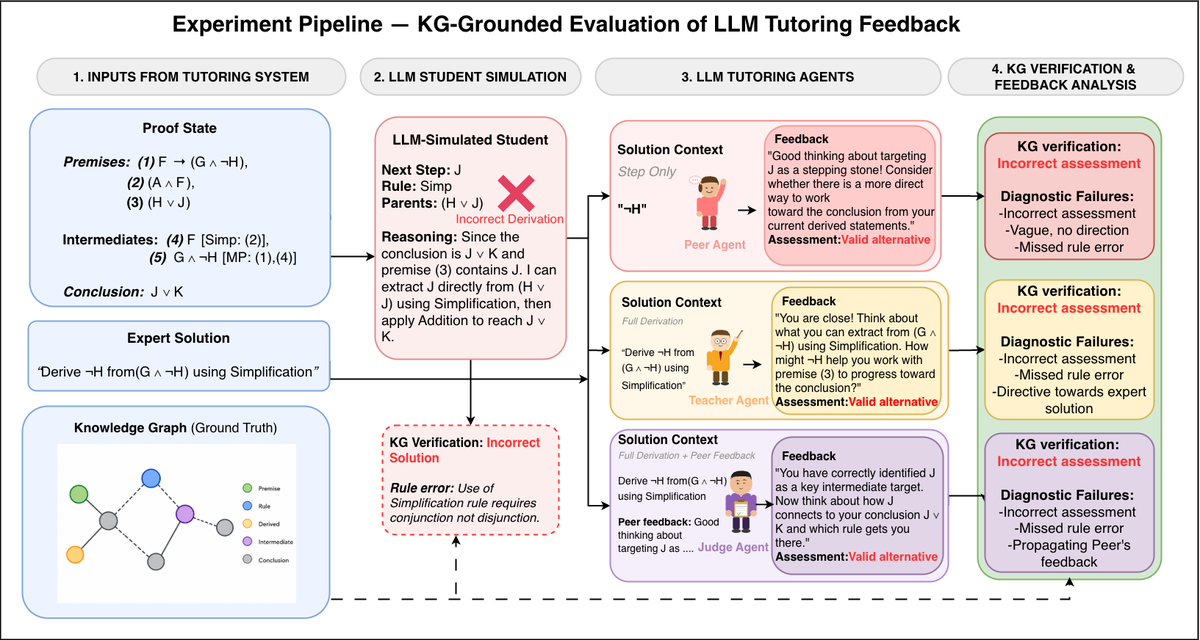
LLM tutoring evaluation pipeline
Knowledge-grounded evaluation pipeline for tutoring feedback.

This project evaluates LLM feedback in propositional logic using knowledge-graph-derived ground truth. It distinguishes optimal steps, valid alternatives, and incorrect reasoning so that feedback quality can be measured where adaptive tutoring matters most.

Focus
Step-level feedback evaluation
Methods
Knowledge graphs, benchmark design, LLM evaluation
See related publications →
02Multi-Agent AI

When Verification Helps—and When It Hurts

Does adding a second agent actually make tutoring feedback more reliable?

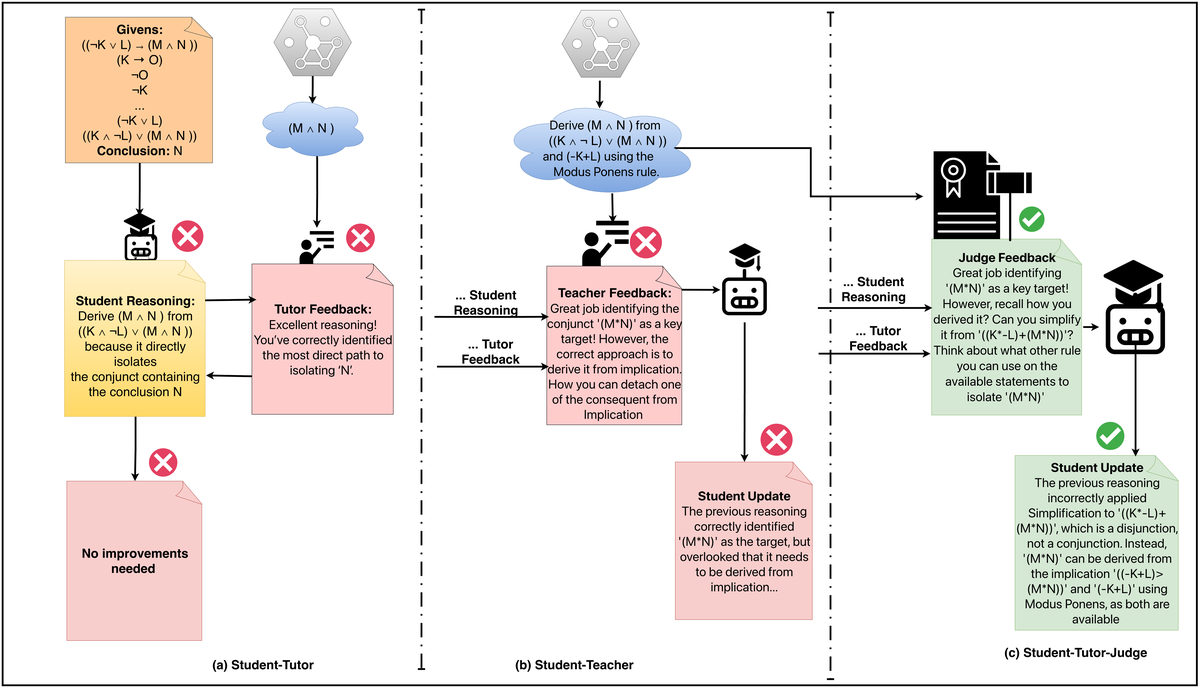
Multi-agent tutoring and verification pipeline
Role-specialized multi-agent tutoring pipeline.

This work studies role-specialized tutoring pipelines in which one agent generates feedback and another verifies it. The project investigates how upstream quality, problem complexity, and agent roles affect the final pedagogical response.

Focus
Multi-agent feedback pipelines
Methods
Controlled experiments, error analysis, proof-state benchmarks
See related publications →
03Computing Education

Responsible LLM Integration in Classrooms

What do teachers and students need for LLM tools to support—not displace—learning?

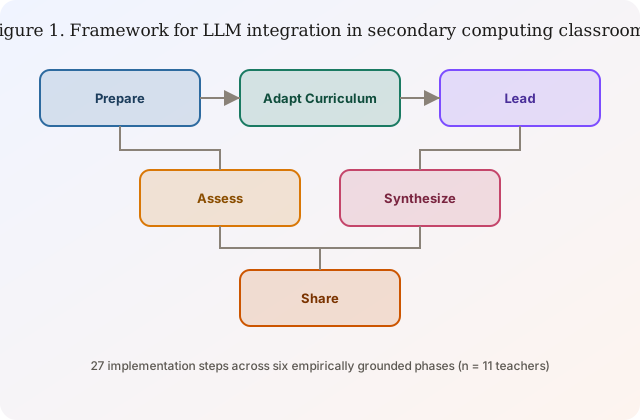
This research synthesizes evidence about student-facing LLM tools and develops teacher-informed guidance for classroom adoption. It connects technical design decisions with pedagogy, assessment, and responsible implementation.

Focus
Student-facing tools and teacher practice
Methods
Systematic review, interviews, surveys, framework development
See related publications →

Questions I Explore

  • How should tutoring agents respond when a student takes an unexpected but valid path?
  • When does adding an LLM verifier improve feedback, and when does it introduce new errors?
  • How can teachers integrate student-facing AI while preserving productive struggle?